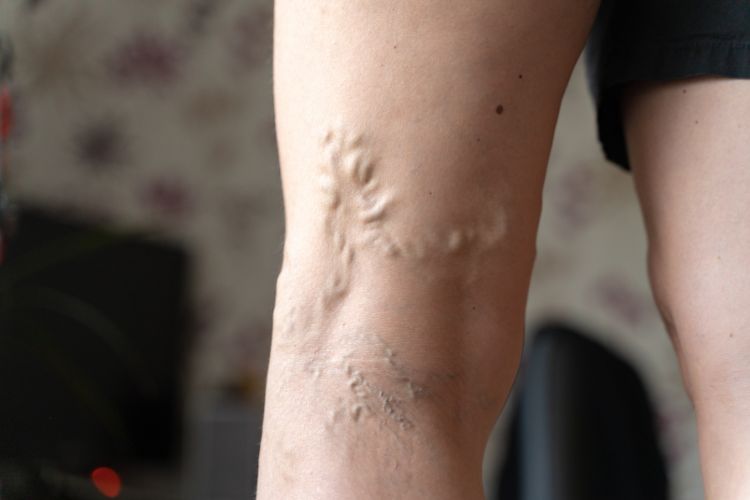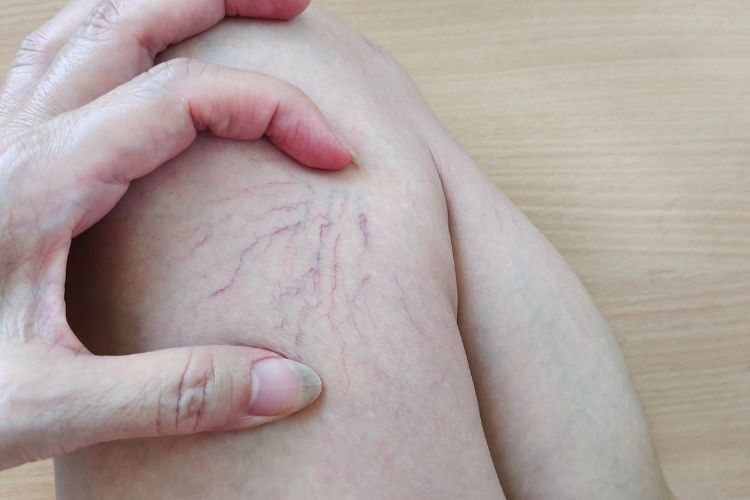
Varicose veins are typically swollen and large veins that bulge and twist under the skin surface. You would normally find this problem in the legs, and it can cause significant hindrance in day-to-day life. In this, the vessel surface becomes thin, and hence it is not able to tolerate the blood flow pressure and, in turn, becomes swollen. At the primary stage, varicose veins may not cause any problem, but at a later stage, abnormalities would start to appear.
So, it is important that you understand the different stages of varicose veins and, based on that, the right doctor needs to be consulted for its treatment. Further, in this article, we would talk about different stages of varicose veins and how to deal with them. Let us begin
Stage 1 of varicose veins
Stage 1 of Varicose Veins is regarded as an initial phase where the reticular or spider veins become visible on the skin surface. In the following stage, you may not witness any major complications or symptoms. In this stage, emphasis is placed on improving discomfort as well as preventing varicose veins from getting worse.
So, at this stage, conservative methods of treatment are used such that the vein health can be managed. Some of the things which are done are modifications of lifestyle, use of minimally invasive techniques such that swelling is reduced and blood flow is improved. In this way, you can continue your everyday tasks while managing the condition in an effective manner.
Also, the treatment choice is dependent on a number of factors such as the health of the patient, symptoms, as well as the preference for treatment that they want. Thus, if varicose veins are diagnosed at an early stage, then complications at a later stage can be avoided.
Stage 2 of Varicose Veins
In the second stage of varicose veins, it becomes very prominent, and it can twist or become larger in the skin. Still at this stage, it can be superficial, and thus the legs’ cosmetic appearance can be affected. Some of the symptoms that you may witness at this stage are cramping, leg pain, and aching, especially if you are standing or sitting for a long time. On the other hand, some individuals witness burning, itching, and throbbing sensations.
The treatment for this stage involves minimally invasive techniques. One of them being Sclerotherapy in which in the vein a solution gets injected which helps varicose veins to collapse and fade. It can be very good treatments for varicose veins that are small in size. The best part is that it can be performed at the clinic itself with minimum downtime.
In the case of varicose veins that are large, the EVLA procedure is implemented, in which a laser fiber is inserted into the vein while sealing the vein. It is best for varicose veins that are large and offers very minimal downtime, and it can easily be performed with local anesthesia.
Stage 3 of varicose veins
During this stage, varicose veins become a lot bigger and start entering the surface of the skin. Their appearance looks similar to a rope as well as twisted and bulge. You can notice this when you are sitting or standing for a long time. Some of the symptoms that you may face are swelling, discomfort as well as heaviness in legs. There can be change in the skin as well such as discoloration or pigmentation.
The best treatments for third stage varicose veins are radiofrequency Ablation that tend to use radiofrequency for heating as well as closing the vein. It is perfect for varicose veins that are large and treatment can be administered with local anesthesia. The best part is that complications risk is very low and downtime is minimal as well.
Another method that is widely used is Ambulatory Phlebectomy, in which varicose veins are removed surgically via tiny incisions. It is perfect for veins that are a lot more visible and large. It also has a short recovery time and can be performed using local anesthesia.
Stage 4 of varicose veins
In this stage, varicose veins become a lot tortuous and enlarged with a lot of distortion and swelling of affected veins. You will also notice changes in skin such as inflammation, eczema, and thickening. Also, the symptoms start getting worse, which include swelling, leg pain, and discomfort. You will also notice changes in the skin such as open sores or ulcers.
For treatment, you need to rely upon vein stripping which a surgical procedure. In this method, veins that are affected are removed through small incisions. It is perfect for varicose veins that can’t be treated using minimally invasive treatments. The downside is that general anesthesia would be administered to the patient, and hence the recovery period is longer as compared to various other procedures.
Another method which is widely used is Foam Sclerotherapy, in which a foam solution is injected into the vein such that a large area can be covered. It is perfect for the veins in which radiofrequency or laser ablation can’t be used.
Stage 5 of varicose veins
Varicose veins in this stage become a lot distorted, severe and twisted with skin discoloration and large swelling. Some of the changes in skin that you may face are scarring, ulceration and hardening of tissues. This can lead to swelling, leg pain and discomfort which can interfere with your life quality as well as daily activities. There can be a high probability that changes in skin can turn out to be non-healing wounds with significant risk of complications and infection.
To treat varicose veins at this stage, surgical procedure is used known as stripping and ligation. In this, the veins that are affected are tied and removed.
Another method that is widely used is endoscopic vein surgery, in which a small camera is inserted to visualize, and then the varicose veins are treated surgically deep inside the leg. It is used in cases where venous ulcers are severe or in DVT cases.
Lastly, in a few rare cases, if significant damage has happened to the vein, then bypass surgery of the vein is done such that blood flow can be redirected around the area that is affected.
Stage 6 of varicose veins
This is the most advanced stage where the varicose veins become severely distorted and enlarged alongside significant ulceration and changes in the skin. Also, ulcers can become deep, and it can lead to different complications as well. You will notice swelling and debilitating leg pain alongside functional impairment.
Further, surgical intervention would be needed to treat this and some of the options include vein stripping and ligation or at times bypass surgery of vein. In this stage, it is advised that you take consultation from a good vein specialist.
CEAP classification of varicose veins
The CEAP classification is used to describe the varicose veins severity. Besides this, it assists researchers, doctors and patients to come under the same page when it comes to describing the problems of vein. The CEAP classification range from C0 which denotes that no venous disease sign is present whereas C6 describes that venous leg ulcer is present. Some of the classifications of CEAP clinical scores are as follows:-
# C0 denotes that no venous disease signs are seen
# C1 score says that small spider veins are present
# C2 denotes that varicose veins are present without any kind of symptoms
# C3 denotes that swelling of the ankle is present due to underlying varicose veins
# C4 score means that skin damage has happened due to varicose veins
# C5 score demonstrates that a healed leg ulcer is present
# C6 dictates that an active leg ulcer is present
When is treatment needed for varicose veins?
The varicose veins treatment should effectively be started once it enters the first stage. Some of the best treatments for stage 1 and 2 are endovenous laser treatment and sclerotherapy which uses procedures that are minimally invasive. In these methods, varicose veins are treated by sealing the veins that are faulty as well as restoring the flow of blood.
For stages 3 to 6, treatment takes place such that symptoms get better and circulation is improved. Further, it also helps to prevent different complications such as ulcers. Some of the common treatments are radiofrequency ablation, ulcer management, and foam sclerotherapy.
Final Verdict
It is important that you understand different stages of varicose veins and take necessary treatment as soon as possible. Further, take treatment from experienced doctors from good hospitals as they can provide you with right kind of advice and proper treatment such that varicose veins can be healed quickly.
At Treatment Range Hospitals, we can provide you with best in class varicose veins treatment using the latest techniques. Besides this, we ensure our patients recover in time. So, Book a consultation today for varicose veins.